The short answer
Roof rejuvenation is a liquid sprayed onto worn asphalt shingles to put oils back into them. The best-known brand says each treatment adds five years and costs $3,000 to $6,000 on a typical 2,000 sq ft home. The Asphalt Roofing Manufacturers Association strongly advises against any coating or rejuvenator on installed shingles. It doesn't fix leaks, and the independent evidence is thin, so check with your shingle maker first.
What roof rejuvenation is
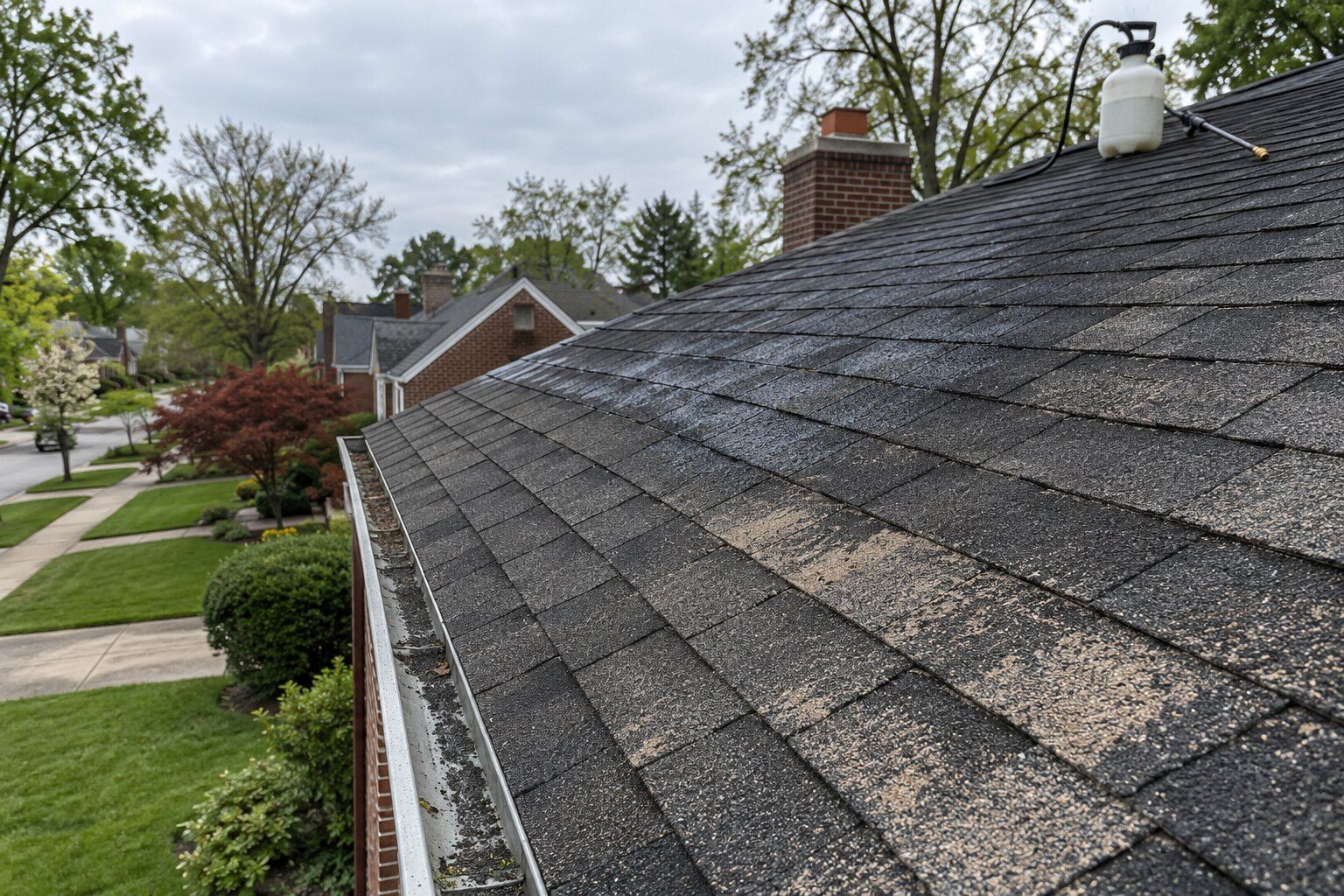
Asphalt shingles slowly lose the oils that keep them flexible, then dry out, curl and shed their granules. Rejuvenation products are sprayed over the roof to soak back into the asphalt. Most are sold as plant-based, and the largest brand, Roof Maxx, says its treatment "restores lost oils, keeping shingles flexible, strong, and able to protect your home for years longer."
It isn't a coating that seals the roof, and it doesn't replace anything. Missing shingles, lifted flashing, a cracked pipe boot or rotten decking are still there after the spray dries.
Need this done?
If your roof has a leak, lifted shingles or failed flashing, a treatment won't fix it. Describe the problem and get a repair estimate first.
Roof repair in Royal OakWhat it claims, and which roofs qualify
Roof Maxx promises its treatment will "strengthen and extend the life of your roof by five years per treatment," and that repeat treatments every five years can extend a roof's life by up to 15 years. It comes with what the company calls a five-year transferable warranty.
It also sets a limit: "If 30% or more of the protective granules are gone, the shingles are too far along for treatment." It says a roof with repeated problems may point to poor installation, where replacement is often the better choice.
- Can be a candidate: a sound asphalt roof that's showing age but still has most of its granules and no active leaks
- Not a candidate: bald patches, curling and cracking across the roof, leaks in several places, or soft decking
- Not the right tool: any roof that's leaking now. That's a repair first.
What the shingle industry says
The Asphalt Roofing Manufacturers Association (ARMA), the trade group for the companies that make asphalt shingles, revised its bulletin on this in July 2026. It says: "ARMA strongly advises against the field application of any type of coatings or rejuvenators over installed asphalt shingles."
ARMA's reasons are that field treatments "may negatively impact the performance characteristics (including the fire classification, algae resistance, impact resistance, etc.)" of the shingles, and that non-permeable coatings can trap moisture. It notes that many manufacturers "specifically do not recommend" field treatments on their shingles, and advises homeowners to check with the shingle maker before applying one.
That matters for warranties. If your roof is still under a manufacturer's warranty, ask the manufacturer in writing whether a treatment affects it before anything is sprayed.
Does it work? What the evidence shows
Independent research is limited. Jack Gray, an independent commercial roof consultant who reviewed the evidence for Roof Observations, found that the main laboratory studies were sponsored in connection with the product's developers, and that the reported gains in flexibility and granule retention were measured days after treatment.
He found no published long-term study tracking how treated shingles perform years later, and concluded that the treatments are "partially effective" under the right conditions. He also notes that insurers don't broadly treat a rejuvenated roof as a younger roof.
So the honest answer is that a treatment may slow aging on the right roof, but nobody has published independent proof of five extra years in a Michigan climate.
Roof rejuvenation cost
No Royal Oak or Metro Detroit roofer we found publishes a rejuvenation price. The figures below are Roof Maxx's own, set beside what local roofers publish for a full replacement.
Published rejuvenation and replacement prices
| Work | Published price | Who publishes it |
|---|---|---|
| Rejuvenation treatment, home of about 2,000 sq ft | $3,000 – $6,000 | Roof Maxx (its own average regional prices) |
| Architectural shingle replacement, most Royal Oak homes | $6,500 – $11,000 | Guthix Roofing, Wyandotte |
| Smaller or straightforward roof replacement | $7,000 – $12,000 | Tresnak Roofing, Royal Oak |
Prices as published, checked October 12, 2026; the replacement figures were checked September 27, 2026. Roof Maxx says prices vary by local dealer and that prep work (pipe boots, nail pops, flashing) costs extra. Its page compares the treatment with a $20,000 to $30,000 replacement; local roofers publish lower replacement figures, so the saving on a Royal Oak bungalow can be smaller than advertised.
For the full range of local replacement prices and what adds to them, see the roof replacement cost guide.
Is roof rejuvenation worth it?
Run the numbers both ways. If a treatment costs a third or more of a replacement and the roof is already near the end of its life, the money may be better spent on the new roof, with ice and water shield and ventilation brought up to date.
Before deciding, ask a roofer to look at the roof and tell you, in writing, what it actually needs. Questions worth asking:
- Are there any leaks, failed flashing or soft decking that need repair first?
- How much granule loss is there, and is the roof past the treatment's own limit?
- Does my shingle manufacturer allow field treatments, and what happens to the warranty?
- What would a repair cost now, and a replacement, so I can compare all three?
The repair or replace guide walks through that decision, and roof replacement explains what a full re-roof should include.
Questions about roof rejuvenation
How much does roof rejuvenation cost?
Roof Maxx, the largest brand, publishes $3,000 to $6,000 for a home of about 2,000 square feet, as average regional prices. It says prices vary by dealer and that prep work such as replacing pipe boots or sealing flashing is extra. No Royal Oak roofer we found publishes its own price.
Does roof rejuvenation void my shingle warranty?
It can. The Asphalt Roofing Manufacturers Association says many manufacturers specifically don't recommend field treatments on their shingles and advises checking with the manufacturer first. Ask your shingle maker in writing before any treatment.
How long does a rejuvenation treatment last?
Roof Maxx says each treatment adds five years and can be repeated every five years. That's the company's claim. An independent consultant's review found no published long-term study of treated shingles.
Will rejuvenation stop a roof leak?
No. It's a treatment for dried-out shingles, not a repair. A leak from flashing, a pipe boot, a valley or missing shingles needs to be found and fixed.
Is my roof too old for rejuvenation?
Roof Maxx says shingles that have lost 30 percent or more of their granules are too far along. Curling, cracking and bald patches across the roof usually point to replacement instead.
Where this information comes from
The facts and figures on this page come from these published pages, checked on October 12, 2026.
- ARMA: Coating of Asphalt Shingles After Installation · Asphalt Roofing Manufacturers Association technical bulletin, revised July 2026
- Roof Maxx: home page · Rejuvenation treatment company's own claims: five years per treatment, granule-loss limit
- Roof Maxx: how much does Roof Maxx cost? · Rejuvenation treatment company's own price guide, modified May 5, 2026
- Roof Observations: asphalt shingle rejuvenation treatments · Independent roof consultant's review of the evidence, updated October 18, 2025
- Guthix Roofing: Royal Oak · Wyandotte roofer's Royal Oak page, updated July 4, 2026
- Tresnak Roofing: new roof cost in Royal Oak and Metro Detroit · Royal Oak roofer's cost guide, published September 14, 2026