The short answer
The black streaks are algae, usually Gloeocapsa magma, and the Asphalt Roofing Manufacturers Association (ARMA) treats them as discoloration rather than damage. Moss is different: Oregon State University Extension says it holds moisture and can lift shingles and let water in. ARMA's cleaning method is a 50:50 mix of chlorine bleach and water, left 15 to 20 minutes and rinsed at low pressure, and never a pressure washer. More sun, and zinc or copper strips or algae-resistant shingles at the next re-roof, help prevent it.
What the black streaks are
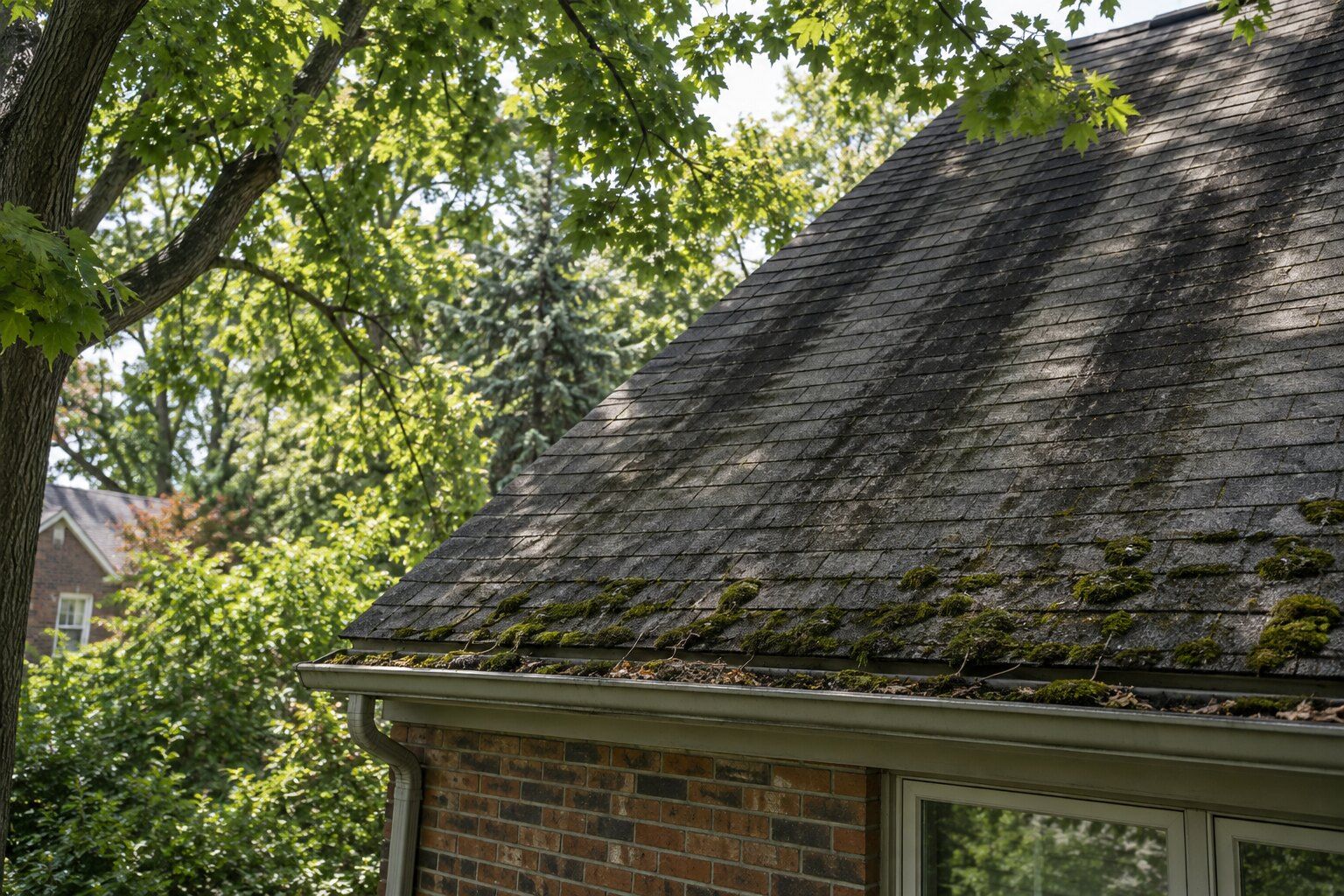
ARMA says the black streaks seen on roofs across the US "are actually algae," most commonly Gloeocapsa magma. The spores travel through the air and collect on roofs, and the growth gradually turns dark brown or black. ARMA says it is more visible on light-colored roofs.
ARMA describes it as discoloration. It doesn't say the algae damages shingles, but it warns that scrubbing "may loosen and remove granules," and granules are what protect the asphalt from the sun.
Need this done?
Moss lifting shingles, or a leak under a mossy patch? Describe it and ask for a repair estimate.
Roof repair in Royal OakMoss is a bigger problem
Moss is a plant. ARMA says it tends to grow on shaded, north-facing roof planes, which on Royal Oak's tree-lined streets often means under overhanging branches and on garage roofs. Oregon State University Extension says moss itself doesn't directly damage roofing, but it traps soil and debris and holds moisture, and on asphalt roofs it can "lift shingles and allow water to penetrate and damage underlying layers."
Thick moss along the eaves of an older garage roof is often a sign that roof is near the end anyway. See garage roof replacement if that's where yours is.
How to clean moss and algae safely
ARMA's guidance for asphalt shingles:
- Use a 50:50 mix of laundry-strength liquid chlorine bleach and water, applied with a sprayer
- Leave it 15 to 20 minutes, then rinse thoroughly with low-pressure water
- Never use a pressure washer on an asphalt shingle roof, and don't scrub: both strip granules
- Protect plants and landscaping from the bleach solution, and wear protective equipment
- Ask the shingle manufacturer before using any other chemical or method
ARMA adds that cleaning only lightens the discoloration for a while, and it may come back. For moss, Oregon State University Extension describes zinc sulfate and potassium salts of fatty acids as treatments, and warns not to use zinc sulfate if you have copper gutters, downspouts or flashing, because zinc corrodes copper.
Let a professional do it
A wet roof treated with bleach is slippery. ARMA recommends hiring trained professionals, and from the ground is the only safe place for a homeowner to look at a roof.
What roof cleaning costs
Published roof cleaning prices
| Work | Published price | Who publishes it |
|---|---|---|
| Moss, algae or lichen removal treatment | $100 – $250 | HomeAdvisor, national |
| Roof cleaning, typical range | $296 – $626, average $461 | HomeAdvisor, national |
National figures as published, updated June 19, 2026, checked October 12, 2026. HomeAdvisor's cleaning page is titled for pressure cleaning; on asphalt shingles, ask for a low-pressure method that follows the shingle industry's guidance. No Royal Oak roofer we found publishes a cleaning price.
Preventing moss and streaks
- Trim branches back so more sun reaches the roof: Oregon State University Extension calls this the most effective long-term fix
- Keep gutters and valleys clear of leaves so the roof can dry out
- At the next re-roof, ask about algae-resistant shingles with copper granules; GAF's Timberline HDZ, for instance, carries a 25-year algae warranty
- Zinc or copper strips at replacement time, which ARMA lists as a preventive measure; it advises against adding them to an existing roof
Streaks on their own are cosmetic. If the shingles under the moss are curling, cracking or bald, the shingle lifespan guide explains the signs a roof is near its end.
Questions about moss and black streaks
Do black streaks damage my roof?
The Asphalt Roofing Manufacturers Association treats algae streaks as discoloration and doesn't describe them as damaging shingles. Scrubbing or pressure washing them off does damage shingles by removing granules.
Is moss on the roof bad?
It can be. Oregon State University Extension says moss holds moisture and debris against the roof and can lift shingles and let water in. Thick moss is worth removing and investigating.
Can I pressure wash my roof?
Not an asphalt shingle roof. ARMA says never to use a pressure washer on one, because high pressure damages the shingles. Use a low-pressure method instead.
What kills moss on a roof?
ARMA's cleaning solution is a 50:50 mix of chlorine bleach and water. Oregon State University Extension also describes zinc sulfate (not for homes with copper gutters or flashing) and potassium salts of fatty acids. Trimming trees for more sun stops it coming back.
Will moss come back after cleaning?
Often, if the roof stays shaded and damp. ARMA says cleaning is only temporary. More sunlight, clean gutters and algae-resistant shingles at the next re-roof help.
Where this information comes from
The facts and figures on this page come from these published pages, checked on October 12, 2026.
- ARMA: algae discoloration · Asphalt Roofing Manufacturers Association guidance
- ARMA: algae and moss prevention and cleaning · Asphalt Roofing Manufacturers Association guidance, modified April 25, 2023
- Oregon State University Extension: how to control roof moss · University extension guidance, reviewed 2025
- HomeAdvisor: roof cleaning cost · National cost guide, updated June 19, 2026
- GAF: Timberline HDZ shingles · Shingle manufacturer's product page